Showing posts with label 4th grade. Show all posts

Sunday, July 17, 2022

Math Puzzles - Scrambled Squares - 4.NBT.4


Drill and Practice! Oh how students groaned and moaned when they were handed a worksheet with problems to work out. They needed the practice though, Practice Makes Perfect! Right? I use Math Puzzles in my room and my students never, ever turn them down! They are aligned to the Common Core Standard that we are working on at the time. I can use them as an assessment or just as practice. I love color and cute, and these are both, but they are also a meaningful activity that incorporates some higher level thinking by having students think about the numbers and move the puzzle pieces around until they all fit together. 


First I took the regular Magic Squares that we have all used for years and “fixed” them up a bit. My Math Puzzles are designed for groups of 4, with each student getting a different Puzzle Sheet. No more having to cut the pieces out yourself and paper clip together for each student. Also, every 4 students will have a different puzzle and you will have the answer sheet for a quick check. This is how it works for me.

Math Puzzles 4.NBT.4 
In the picture you see a Teacher Answer Sheet #1 and a Scrambled Squares for Students # 1. The fonts match on the TA Sheet 1-4 and the Scrambled Student Sheet 1-4. I put the 4 TA sheets on a Clipboard to carry with me so I can monitor my students working out the problems.


Students working in journals using Math Puzzles 4.NBT.4

The picture above shows two different students' work. After cutting out their squares, they get to work. The math problems align with the common core standard 4.NBT.4. They are working the math problems out in their journals (showing their work.) I ask them to write the answers on the math puzzle pieces because it makes putting the puzzle together easier. 

Notice one Student pasted the I Can Statement at the top of her puzzle page. This is required and is included in the Math Puzzle 4.NBT.4 packet. ( I always include PAM somewhere in the  puzzle.) They love it!

This student went to another page where she had some extra room (to save her paper) and starting working her problems out. The journals are graded every 9 weeks and kept to show students growth.

You can see where this student has written her answers in with pencil.

The 4 different fonts keep the students from glancing over at what someone else is doing. All students have the same 31 problems that match 4.NBT.6 but they are scrambled up!


Some students work methodically. 

These are finished squares from 5th grade.

After finishing, I check their work by just looking at my 4 clipboard pages. Then they glue the squares and color. Some students never get to the coloring part because they might work slower than others. To differentiate by giving some students less problems to work with, just take off the bottom 4 squares from your Teacher Answer Sheet. When the student has cut all of his out, take those bottom pieces away. It gives the same practice but with fewer problems to do which would be helpful with some students who cannot process so many at one time.

Hope this helps with your classroom activities. Email me with any questions for comments! Next time I'll show of the work we are doing with task cards.


Saturday, August 13, 2016

Study Guide for Look To The North: A Wolf Pup Dairy by Jean Craighead George


Why I use Study Guides in my classes. I love reading about animals and I have always had students that love reading books about animals. The Informational Narrative, Look To The North: A Wolf Pup Diary by Jean Craighead George is the sweetest nonfiction book that tells the story of three wolf pups as they grow up in the north. Jean Craighead George loved animals and this love comes through in all of her books. The book is beautifully illustrated by Lucia Washburn. The lexile level is 580L. (http://www.scholastic.com/teachers/book/look-north)

I didn't choose the book because of a certain grade level, I wanted my students to enjoy reading a beautifully illustrated book, with a clear sequence, and one that they could find details in the text to answer questions and new vocabulary words. I don't think anyone is ever too old to read a story with beautiful illustrations. To make sure that my students were receiving the instruction that followed the Common Core, I made a Study Guide. You can download a preview of this study guide at my teacher store on Teachers Pay Teachers.

Student has finished the research section and is now working on connections  to the story.
I made this Study Guide so that my students can get all the information needed, plus work at their own pace. I included some research, phonics, spelling, vocabulary, lots of critical thinking questions and writing. I also included a Science and Social Studies Integration. While students are busy working together or independently, I can pull students in small groups and monitor other student's progress. I always makes sure students have access to a computer, dictionary, pencils and erasers, and always a book and a nice box of crayons.

The Vocabulary section pulls in the vocabulary words that a student might not be familiar with. There is a section at the bottom of this page where students must come up with a word from the text that they think should have been a vocabulary word.

There is a poem with relavent questions to answer and also a section on personification. 


My favorite part of the study guide is the front cover. Students draw a new cover and they must use color and details from the text!


Each student uses a dictionary for the Vocabulary section.


Students reference the text to answer the Comprehension Question. Each question has the Revised Blooms level so students know why this question is important.

Each section has the Common Core alignment. You can also see the Revised Blooms Levels above each Comprehension Question.

The Science Research has the Essential Question and give students a chance to learn more about an Arctic animal. I also post urls and videos on Edmodo so students have a starting point for reference.

Finished cover showing the Alpha pup. 

Finished Cover. This is before I look over the Study Guide. Students will be given a chance to correct handwriting and grammar mistakes before turning the guide in for grading.

Another sweet cover.

All my students wanted their cover on my blog. They did a great job of using details from the story to make their cover. If you have read the book, you know that Talus is smelling the grizzly and alerting his siblings. The blue flowers are Harebells.

Cover showing originality. 

Fast finishers spend time coloring and usually find parts where they might need to erase and start over. Coloring not only gives my students a chance to process the information they learned, it also gives them a chance to check back over their work.

I like the way this student illustrated her vocabulary word. Not only did she draw the harebells she also illustrated that they bloom in July.

I always include a Phonics section. Students in 4th and 5th grade still need phonics instruction, even if it is just reinforcing what they already know.


This is a very creative cover, this student wanted to include the title after drawing so she put it into her moon and clouds.


A lot of pictures I know! My students love seeing their work on my blog. I wish I could show their sweet faces while they are working on these study guides. This guide has 12 pages. This might be daunting if I had given them 12 pages of worksheets. In a nice booklet, they are able to read and study the book without being intimidated by the workload. And I have a product showing their learning and growth.

Study guides can be useful tools teaching the Common Core way. Students are involved, there is a section where they must read a poem to a buddy and then listen while their buddy reads back to them. Students are working independently but can discuss and collaborate as needed. I can monitor, check for understanding and also work individually with a student or with small groups. Students are using the computer and a reference book. They are involved with their learning and delving deeper into the text with the comprehension questions.  This book seems like a nice picture book, but students are learning to infer, evaluate and question the text they are reading.

Let me know if you have any ideas about using Study Guides in your classroom.

As always, thanks for visiting! 

Wednesday, March 4, 2015

Scrambled Squares - Math Puzzles - Have Fun Learning!


Drill and Practice! Oh how students groaned and moaned when they were handed a worksheet with problems to work out. They needed the practice though, Practice Makes Perfect! Right? I use Math Puzzles in my room and my students never, ever turn them down! They are aligned to the Common Core Standard that we are working on at the time. I can use them as an assessment or just as practice. I love color and cute, and these are both, but they are also a meaningful activity that incorporates some higher level thinking by having students think about the numbers and move the puzzle pieces around until they all fit together. 
Math Puzzles CCSS Aligned 4.NBT.4

First I took the regular Magic Squares that we have all used for years and “fixed” them up a bit. My Math Puzzles are designed for groups of 4, with each student getting a different Puzzle Sheet. No more having to cut the pieces out yourself and paper clip together for each student. Also, every 4 students will have a different puzzle and you will have the answer sheet for a quick check. This is how it works for me.

Math Puzzles 4.NBT.4 
In the picture you see a Teacher Answer Sheet #1 and a Scrambled Squares for Students # 1. The fonts match on the TA Sheet 1-4 and the Scrambled Student Sheet 1-4. I put the 4 TA sheets on a Clipboard to carry with me so I can monitor my students working out the problems.


Students working in journals using Math Puzzles 4.NBT.4

The picture above shows two different students' work. After cutting out their squares, they get to work. The math problems align with the common core standard 4.NBT.4. They are working the math problems out in their journals (showing their work.) I ask them to write the answers on the math puzzle pieces because it makes putting the puzzle together easier. 

Notice one Student pasted the I Can Statement at the top of her puzzle page. This is required and is included in the Math Puzzle 4.NBT.4 packet. ( I always include PAM somewhere in the  puzzle.) They love it!

This student went to another page where she had some extra room (to save her paper) and starting working her problems out. The journals are graded every 9 weeks and kept to show students growth.

You can see where this student has written her answers in with pencil.

The 4 different fonts keep the students from glancing over at what someone else is doing. All students have the same 31 problems that match 4.NBT.6 but they are scrambled up!


Some students work methodically. 

These are finished squares from 5th grade.

After finishing, I check their work by just looking at my 4 clipboard pages. Then they glue the squares and color. Some students never get to the coloring part because they might work slower than others. To differentiate by giving some students less problems to work with, just take off the bottom 4 squares from your Teacher Answer Sheet. When the student has cut all of his out, take those bottom pieces away. It gives the same practice but with fewer problems to do which would be helpful with some students who cannot process so many at one time.

Hope this helps with your classroom activities. Email me with any questions for comments! Next time I'll show of the work we are doing with task cards.

Monday, May 6, 2013

Summer Reading Response Journal - Using Blooms Revised Taxonomy


Responding To Text, Common Core, Journal, Summer Reading, Blooms Revised Taxonomy, Questioning, Creativity, Responding to Text, Informational Text.
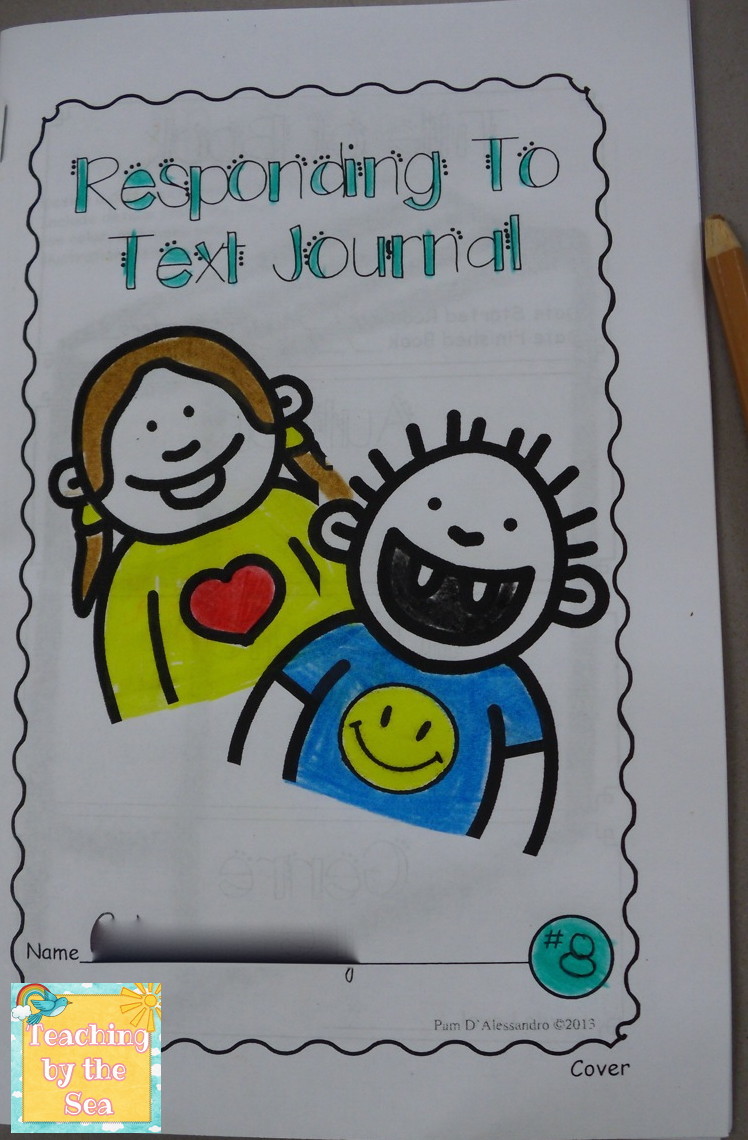
You know how some things just come about by accident? Well that is how my Responding to Text Journal came about. I knew I needed some way for my students to record their thoughts about their independent reading. I have used index cards for each chapter and just writing in a composition book. Those were all okay, but the index cards got lost and we have so many of the marbled composition books that I knew I needed a change. That's how I came up with this journal.


The Responding To Text Journal is 24 pages. Easy to use, I just printed, then copied front to back and stapled in the middle. There it was, a great little journal that my students can take home with them over a break or use in class and home. I used these little gems the past few weeks while I was pulling students back for some Intensive Care in reading! We had been reading the book, The City of Ember for silent reading time. As I was pulling students that needed help I gave this journal to my other students. These are 4th graders who are somewhat higher leveled thinkers and need rigor and challenge. They also love to color as you can see from the cover.

Many times my students ask me if they can color while they are thinking of what to write. I usually do not let them color until they have written something in their journals. If you are a good writer though, processing and thinking time is imperative. 


The inside page is easy peazy though! They do have to write when they started the book, how many pages and chapters the book has, and other important information. This book has a higher Lexile level than I usually allow for silent reading, but we are going to read along with the Audio which will help with their understanding.

On each page students have to answer one of the questions in each box that relates to one of the Blooms Revised Taxonomy levels. This was hard for a few of my students and I let them draw their answers out. At the top they write the chapter they are referring to and the pages. Some books, like the Mary Pope Osborne Magic Tree House books, the chapters are short so they would write the page numbers and spend more time with each chapter.


I did some spot checking and asked Why? on a few pages so they would give me more details. This is a learning process though and takes some students longer than others. I do think this will be a good way to have students think about their reading. It doesn't take long, the graphics are cute, and they have a choice of questions.


To keep my students from getting too bored or tired of 'thinking,' I made some graphic type pages where they can have some creative thinking time and draw and design. All in all, my students are enjoying this journal. I think this will be great for over the summer when I want them to read some of the Battle of the Book books or any of the books that are recommended for summer reading.

This journal is on sale in my Teachers Pay Teachers store, Pam-Dalessandro. There is a huge Teacher Appreciation Sale for May 7 and 8th! 28% off in my store and a lot of other stores on the site. 

Thanks as always for viewing my blog and looking at what is going on in my classroom.
I am hoping to change grade levels next year. I have taught all grades, except 6th, so am anxious to see where I will be placed. AIG students are wonderful and I have enjoyed this year. It hasn't been easy teaching 4th and 5th grades with a 3rd grade pull in. I want to concentrate on one grade level again, I think that is enough for any of us!

Good luck to everyone on their EOGs and have a wonderful Teacher Appreciation Week!